Archive
Eleven items. Each catalogued for what it actually is — a photographic reproduction, a modern painting, a press photograph — rather than for what it is usually captioned as.
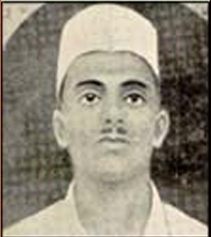
Sukhdev Thapar — photographic reference
A reproduction of the surviving studio photograph from which most later portraits of Sukhdev Thapar derive. Low resolution; the original print and its date are not established here.
Photographic reproduction · 211 × 237 px · Used on the home page
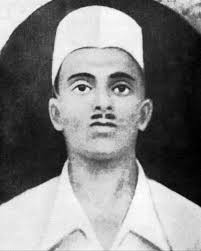
Sukhdev Thapar — second photographic variant
A second scanned reproduction of the same photographic source, cropped and toned differently. Comparing the two shows how much variation enters through reproduction alone.
Photographic reproduction · 201 × 251 px · Used on the Rajguru page
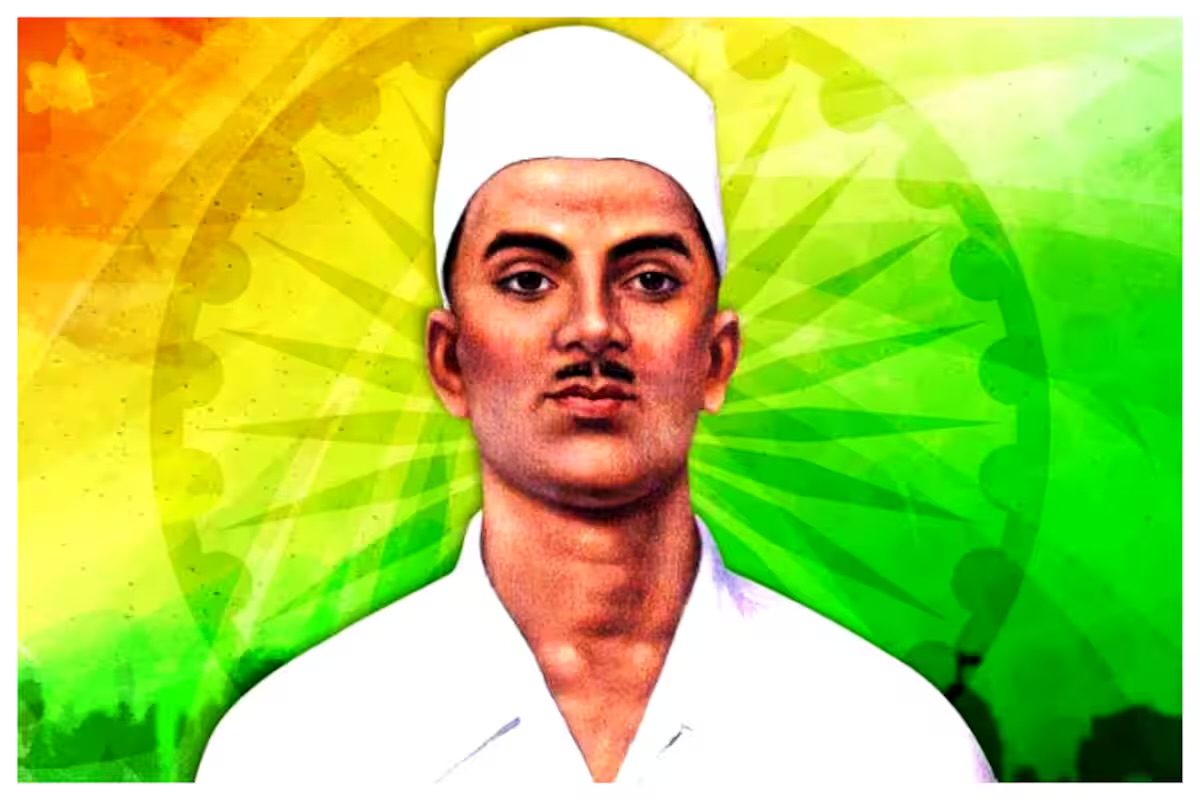
Sukhdev Thapar — principal portrait plate
The highest-resolution portrait held here. It is a modern colour rendering worked up from the photographic source, not a photograph. Presented in monochrome throughout this archive.
Modern digital rendering · 1200 × 800 px · Home page hero
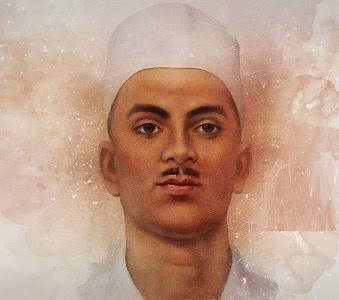
Painted portrait
A painterly interpretation of the same source photograph. The softening of the features is the painter’s, not the camera’s.
Modern painting · 339 × 300 px · Used on The Life
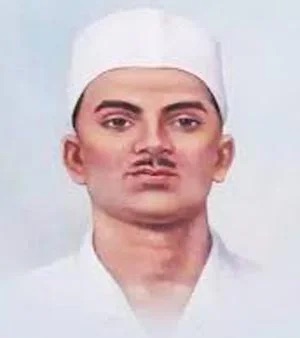
Colourised portrait
A colourised rendering on a plain ground. Widely circulated online as a photograph; it is not one.
Modern colourisation · 300 × 338 px · Used on The Revolution
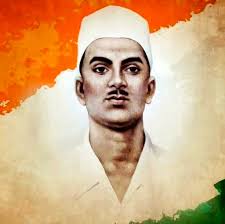
Illustrated portrait
A commemorative illustration set against a coloured ground. Included as an example of how the single source portrait is repeatedly re-dressed.
Modern illustration · 225 × 224 px · Used on The Network
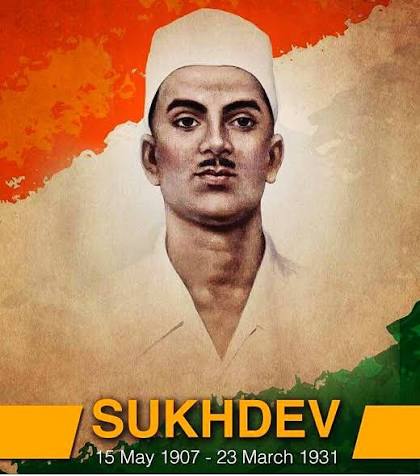
Commemorative dates poster
A modern commemorative graphic carrying his dates. It is a poster made for anniversaries, not a historical document, and is captioned as such wherever it appears here.
Modern graphic · 420 × 476 px · Used on the Bhagat Singh page

Contemporary media commemoration graphic
A banner graphic of the kind produced by news outlets each 23 March. Held here as evidence of how commemoration is manufactured for circulation, not as a portrait.
Modern media graphic · 1280 × 720 px · Archive only
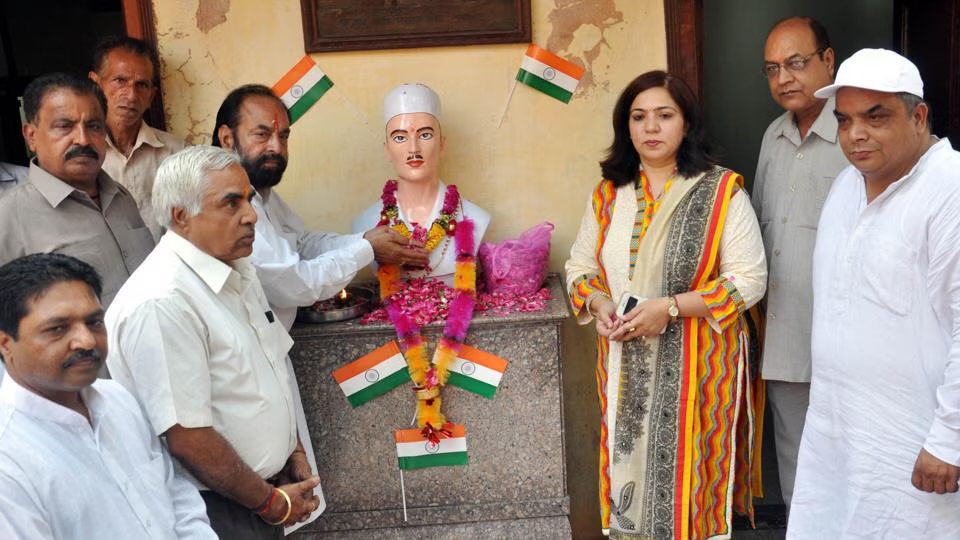
The family house at Naughara, Ludhiana
A press photograph taken at the Thapar family house in the Naughara locality of Ludhiana during a commemoration. The house has been the subject of repeated demands for heritage protection.
Contemporary press photograph · 960 × 540 px · Used on The Life
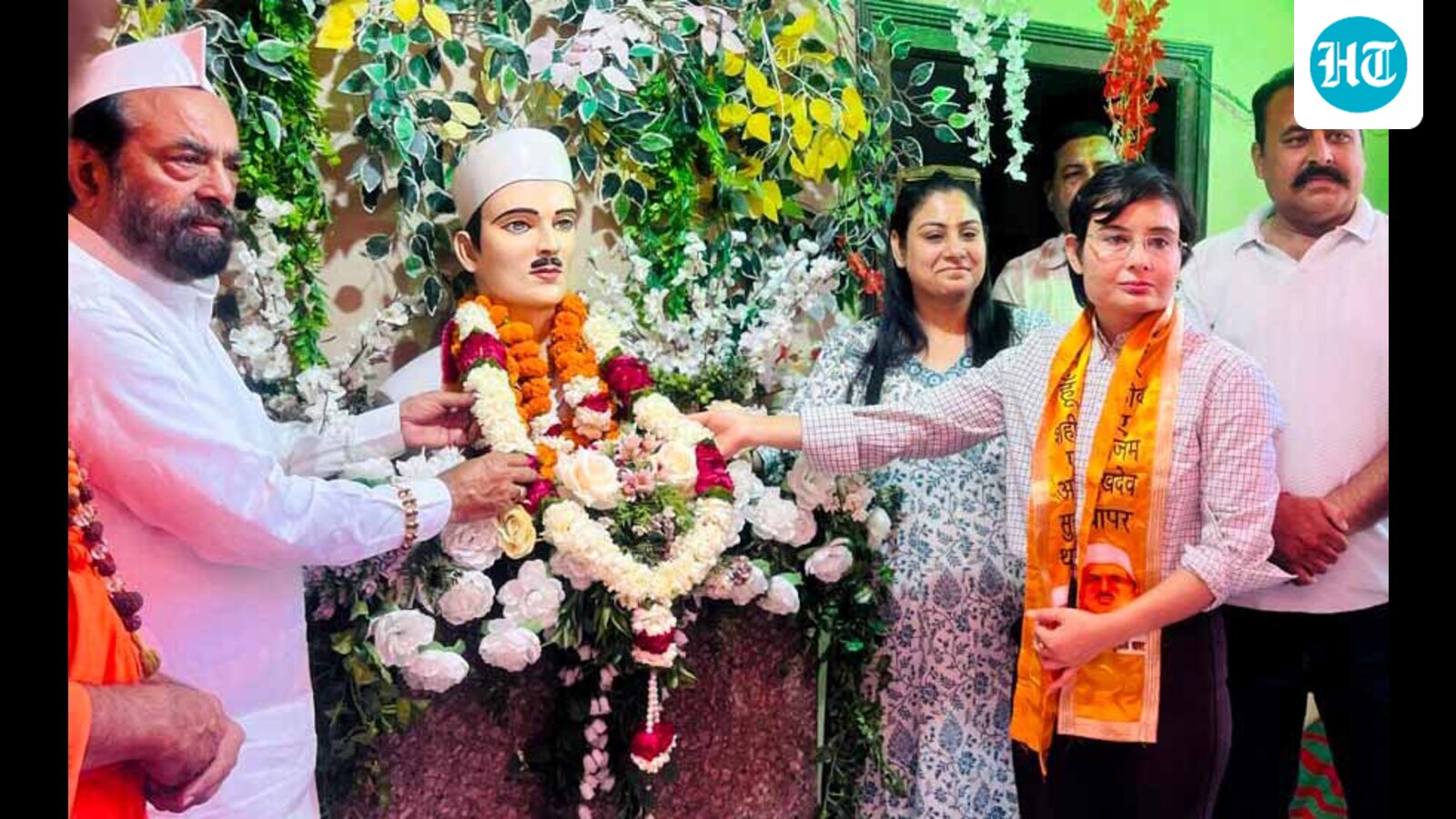
Floral tributes at a statue
A press photograph of garlands being placed on a statue of Sukhdev Thapar during an anniversary commemoration.
Contemporary press photograph · 1600 × 900 px · Used on The Legacy
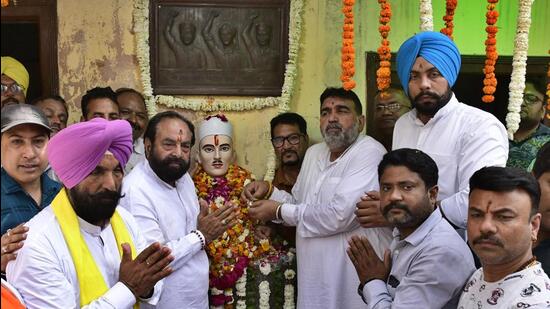
Commemoration at a memorial bust
A press photograph of a tribute at a memorial bust. The relief behind it depicts the three men together — the grouping through which Sukhdev is almost always seen.
Contemporary press photograph · 550 × 309 px · Used on The Legacy
What This Archive Does Not Hold
Stating the absences is part of describing the collection.
There are no manuscripts here. No trial documents, no police files, no newspaper originals, no family papers, no correspondence. The collection consists entirely of images, and eight of the eleven are modern renderings rather than photographs.
This is worth stating plainly, because archives of this kind are often presented with categories — Documents, Records, Newspaper Material — that are empty, or filled with decorative graphics styled to resemble historical papers. Nothing on this site has been designed to be mistaken for a primary document. The newspaper-style panel on the Assembly page and the case-file styling on the Trial page are presentational, and both say so on the page.
The material that would deepen this record exists elsewhere: the trial papers, contemporary press reporting, and the memoirs of the men sentenced alongside him. Where such material can be lawfully and properly reproduced, it belongs here.
Every item is captioned for what it is. A painting is called a painting. A colourised rendering is called a colourised rendering. A press photograph from a recent anniversary is not presented as a historical photograph. No image on this site has been generated to depict a historical scene.
Sources & Method
How the statements on this site were arrived at, and what standard each one is held to.
Corroborated across independent, reputable accounts — dates, places, the structure of the trial, the sentences, the executions. Stated without qualification.
Well attested but resting on later recollection, chiefly the memoirs of surviving comrades. Reported as recollection, with that basis named.
Where sources conflict — the exact day of an arrest, the timing of a death, the fine detail of the night of 23 March 1931. The conflict is reported rather than resolved.
What has been excluded
No invented quotations. No reconstructed dialogue. No imagined interior thoughts. No undocumented anecdotes, however widely circulated. No fabricated citations, and no citation of a source not actually consulted in the published literature. Where a text exists but published versions differ in wording or translation — the letter attributed to Sukhdev and addressed to Gandhi is the clearest case — the text is described rather than quoted.
Starting points for further reading
- S. Irfan Habib, To Make the Deaf Hear: Ideology and Programme of Bhagat Singh and His Comrades
- Kama Maclean, A Revolutionary History of Interwar India: Violence, Image, Voice and Text
- The collected writings of Bhagat Singh in the scholarly editions compiled by Chaman Lal
- Shiv Verma’s recollections, by one of the men sentenced in the same judgment
- Bipan Chandra and others, India’s Struggle for Independence
- Institutional collections including the National Archives of India and the Prime Ministers’ Museum and Library, New Delhi
Corrections
If any statement here is wrong, it should be corrected. The contact details on this site exist for that purpose, and a correction supported by a source will be acted on.