A memorial, a bus terminal, a public holiday and a house in Ludhiana. Commemoration is real, and it is also one of the ways a country stops paying attention.
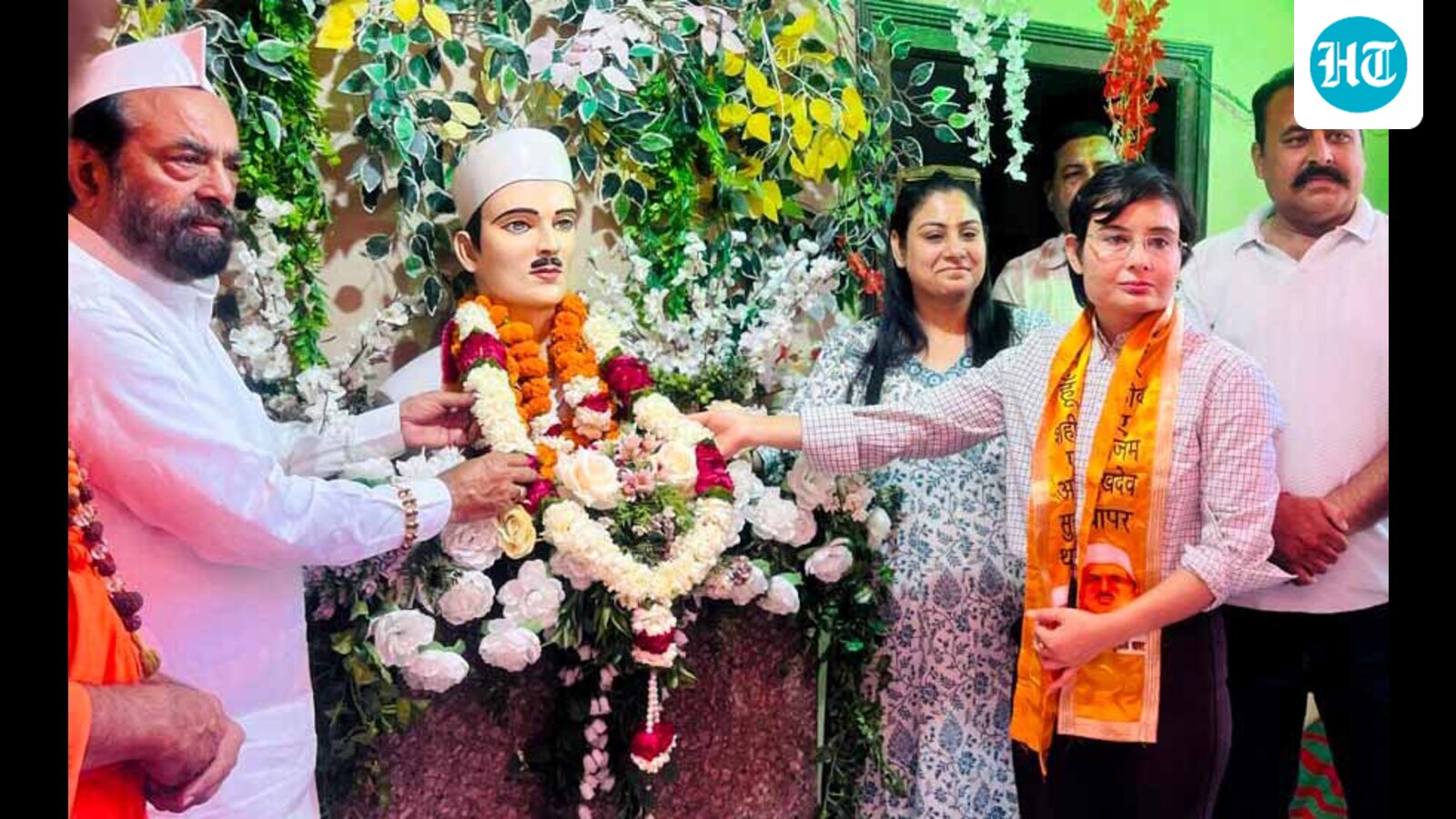
Plate X Floral tributes at a statue of Sukhdev ThaparContemporary press photograph
I —
Where He Is Marked
The physical infrastructure of remembering.
01
Hussainiwala
The National Martyrs Memorial stands on the bank of the Sutlej in Firozpur district, Punjab, at the site where the three men were cremated on the night of 23 March 1931. After Partition the site lay across the boundary; it was transferred to India in 1961 in exchange for territory. The memorial was damaged during the 1971 war and subsequently rebuilt.
02
Shaheedi Mela
A fair is held at Hussainiwala each 23 March. It draws very large numbers from across Punjab, and functions as the principal annual act of public commemoration for the three men.
03
Shaheed Diwas
23 March is observed across India as Martyrs’ Day, marking the date of the executions. It is one of the few dates in the Indian calendar named for a colonial-era political killing rather than a victory.
04
Ludhiana
His birthplace carries his name on its principal inter-state bus terminal — the Shaheed Sukhdev Thapar Inter-State Bus Terminal — alongside statues and busts at which garlands are placed on anniversaries.
05
Naughara
The family house in the Naughara locality of Ludhiana still stands. It has been the subject of repeated public demands for formal preservation and heritage protection, and of recurring reporting on its condition.
06
On screen
Sukhdev appears as a supporting character in the Hindi films centred on Bhagat Singh, most visibly in the cluster of productions released in 2002. He is almost never the subject; the casting reproduces the historical framing this archive is arguing against.
II —
The Problem With Commemoration
Everything listed above is genuine and none of it is trivial. A country that names a bus terminal after a hanged twenty-three-year-old is making a statement about what it believes it was founded on.
But commemoration of this kind has a specific failure mode. It preserves the death and discards the politics. Sukhdev Thapar can be garlanded every March by people who would find the programme he died holding — a secular, socialist reconstruction of Indian society, not merely a transfer of authority from British to Indian hands — entirely unwelcome.
This is not an accusation against anyone in particular. It is a structural feature of how states remember revolutionaries. The safest version of a radical is a dead one, and the safest use of a dead radical is as a symbol of courage in general rather than of any argument in particular.
What restoring him would involve
Reading what the HSRA actually wrote about its objectives. Understanding the Naujawan Bharat Sabha’s deliberate secularism as a political choice made against the communal organisation of its own time, not as a decorative virtue. Taking seriously that these were people who had thought hard about strategy and disagreed with each other about it.
And in Sukhdev’s case specifically: recognising that organisational work — recruiting, teaching, maintaining a structure under surveillance — is what makes a movement, and that the reason he is the least famous of the three is that this work leaves the fewest photographs.
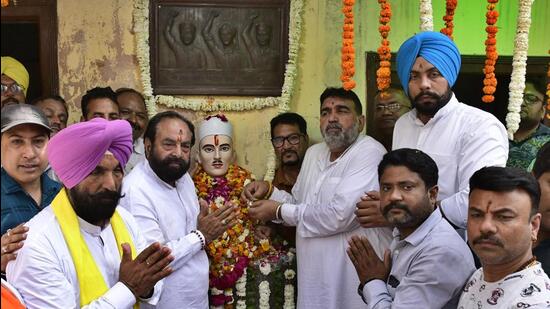
Plate XI Commemoration at a memorial bustContemporary press photograph
A recurring visual
Note the relief behind the bust: three faces together. Even at the site of commemoration, Sukhdev appears as one third of a set. The grouping is historically accurate — they were tried and executed together — but it is also the mechanism by which his individual record disappears.
III —
In Historical Scholarship
The HSRA has been seriously studied. Sukhdev, individually, has not.
Academic work on the revolutionary movement has moved a long way from the hagiography that dominated popular accounts for decades. Historians have examined the HSRA’s ideology and programme as a serious political position rather than as youthful heroism, and have studied how the movement’s images and texts circulated — which is directly relevant to why a small number of portraits came to stand in for entire lives.
Within that literature, Sukhdev Thapar appears consistently but rarely as the subject. There is no comparable body of work on him individually, for the reason that runs through this entire archive: he left almost no writing, and the historian’s craft depends on text.
That is an argument for more careful use of the material that does exist — the trial record, contemporary reporting, and the memoirs of the men imprisoned alongside him — not for filling the gap with invention.