Naujawan Bharat Sabha
Open membership, public meetings, political literature, deliberately secular. Its work was legal, visible and mass-facing — and it identified the young men who might be approached for the other organisation.
Responsible for the HSRA’s work in Punjab: recruitment, political education, safe houses and the movement of people and materials.
The HSRA was not founded in 1928. It was rebuilt in 1928, out of the wreckage of something the state had already destroyed once.
The Hindustan Republican Association was founded in 1924 by revolutionaries including Ram Prasad Bismil, Sachindranath Sanyal and Jogesh Chandra Chatterjee. In August 1925, needing money, its members robbed a train at Kakori in the United Provinces. The state’s response was comprehensive: mass arrests, a long conspiracy trial, and in December 1927 the executions of Bismil, Ashfaqullah Khan, Roshan Singh and Rajendra Lahiri. The organisation ceased to function.
What met at Feroz Shah Kotla in Delhi on 8–9 September 1928 was the surviving remnant plus a new generation, chiefly from Punjab and the United Provinces. They did three things: constituted a central committee, placed the armed wing under Chandra Shekhar Azad, and changed the name.
The insertion of Socialist was the most consequential decision of the meeting. It committed the organisation on paper to a position that had been implicit and contested: that the objective was not merely the removal of the British but the reconstruction of Indian society, and that a transfer of power to an Indian propertied class would not be a revolution.
This is the political inheritance Sukhdev died holding, and it is the part of the story most often removed from commemoration.
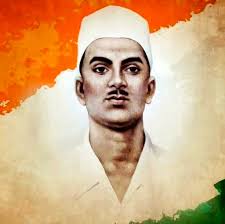
The surface organisation and the underground one shared their people. That was the design.
Open membership, public meetings, political literature, deliberately secular. Its work was legal, visible and mass-facing — and it identified the young men who might be approached for the other organisation.
Clandestine, compartmented, armed. Central committee, provincial responsibilities, an armed wing under Azad. Membership was concealed; the prosecution reconstructed it after the fact, largely from approvers.
He worked at the seam between the two — visible enough to organise publicly, trusted enough to run the clandestine side of a province. That dual position is precisely what made him worth prosecuting.
Neat organisational diagrams of the HSRA should be treated carefully. Much of the detail in circulation derives from the prosecution’s reconstruction at the Lahore Conspiracy Case, which had an institutional interest in demonstrating a disciplined, hierarchical conspiracy. The organisation was real; the tidiness may not be.